

Why Two Bangles Marked 2.6 Are Never the Same Size (And What We Did About It)
A bangle marked 2.6 can measure anywhere from 5.8 cm to 6.7 cm depending on its shape. So we measured every size in every shape and published the numbers.

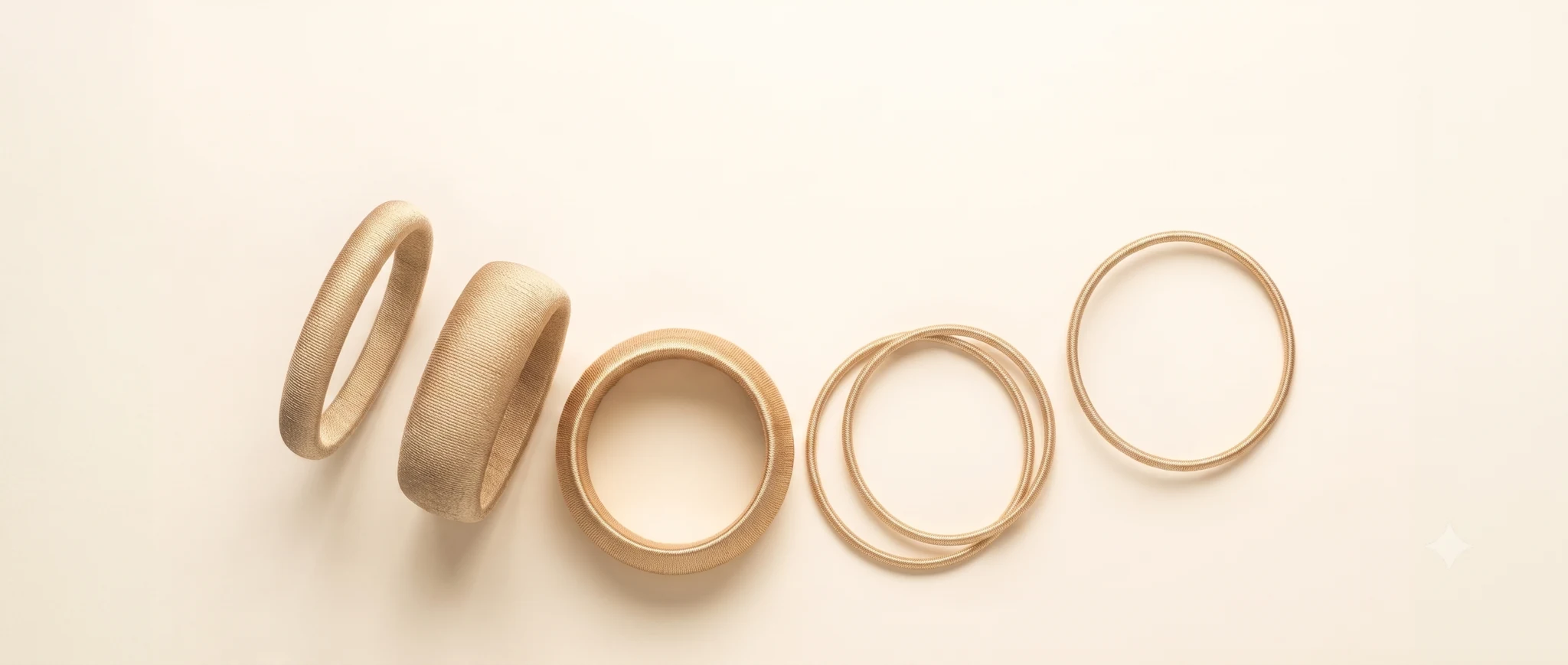
Every handmade bangle seller in Bangladesh sells sizes called 1.8, 2.4, 2.6, 2.8 and 2.10. Almost nobody can tell you what those numbers actually measure. That is not carelessness. It is simply how the trade inherited its vocabulary, from an era when bangles came in one or two shapes and a rough label was enough.
The industry has moved far past that point. We now work with ten distinct shapes, each formed on a completely different mould. And the moment shapes multiply, a shared size label stops meaning a shared fit.
Today we are publishing our answer to that problem: a complete, hand measured size guide covering every shape we make, with real inner diameter figures in centimetres.
The problem is structural, not personal
When a customer tells us she wears 2.6, she is telling us something true about her own experience. She has bought a 2.6 before and it fit. The difficulty is that her reference bangle was a specific shape, made on a specific mould, by a specific maker.
Look at what 2.6 actually means across our own collection:
Thin: 5.85 cm
Pola: 5.8 cm
Plain: 6 cm
Classic: 6.2 cm
Kakon: 6.2 cm
Half Bala: 6.7 cm
That is a spread of nearly a full centimetre inside a single label. On a wrist, a centimetre is not a rounding error. It is the difference between a bangle that slides on comfortably and one that will not cross the knuckle at all.
This is the quiet reason behind a large share of exchanges and returns across this entire industry. Not poor craftsmanship. Not a careless customer. A measurement system that stopped being precise enough for the products being made.
What we measured, and how
Over several months we physically measured the inner diameter of every size in every shape we produce. Not calculated, not estimated from the mould specification. Measured, piece by piece, with a scale laid across the widest point of the inner opening.
The result is ten separate charts, one for each shape: Classic, Thin, Plain, Kakon, Pola, Half Bala, Bala, Thin Plain, Bold Plain and Square. Each chart lists only the sizes that shape is genuinely produced in. Where a shape is not made in a particular size, the chart says so instead of quietly inventing a number.
We also built a side by side comparison table so you can see the full spread across all ten shapes at once. That table is, in our view, the most useful thing on the page. It shows at a glance why "I wear 2.6" was never a complete answer.
How to find your size in three minutes
The most reliable method does not involve measuring your hand at all.
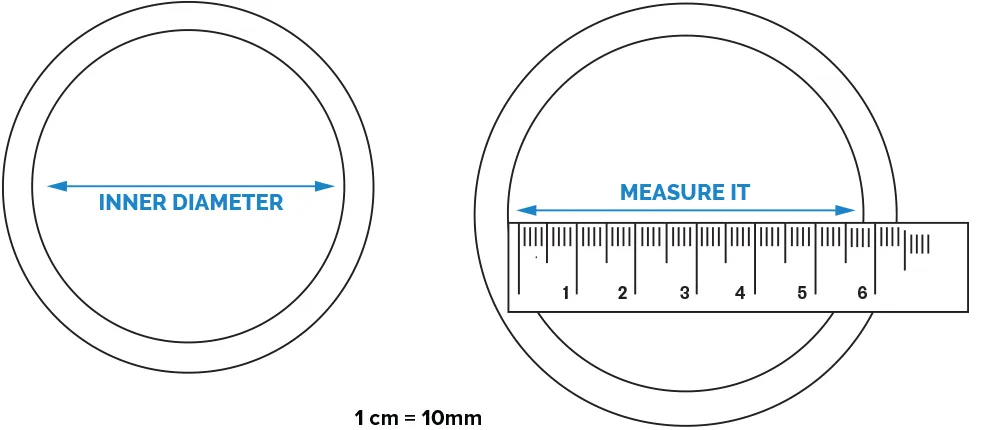
Take a bangle you already own that fits you comfortably.
Place it flat on a table and lay a scale across the centre of the inner opening.
Read the inner diameter, edge to edge, in centimetres.
Match that measurement against the chart for the shape you want to buy.
Two things worth remembering. A bangle has to pass over your knuckles, so the width of your palm matters more than the width of your wrist. And if you fall between two sizes, take the larger one. Hands swell slightly through the day, and a bangle that is marginally loose is wearable while one that is marginally tight is not.
If your measurement still sits awkwardly between two numbers, send it to us on WhatsApp and we will match it for you.
We are opening this up to the whole market
We built this guide because we needed it. We are publishing it because the industry needs it more.
Tanzi Stretto paid for the time, did the measuring, and mapped the shapes. We could have kept it as a quiet competitive advantage. We would rather it became a standard.
Any bangle maker in Bangladesh is welcome to use this guide, reference it, or measure their own moulds against it. Any customer buying from any page is welcome to use it to understand what they are actually ordering. Handcrafted bangles grew from a niche into a real industry in six years. An industry deserves a shared measurement standard, and until now this one did not have one.
If sizing stops being a guessing game, fewer parcels come back, fewer customers walk away disappointed, and more people keep wearing handmade bangles. That outcome is better for every one of us working in this craft.
Where the guide lives
The size guide is permanently available at tanzistretto.com/size-guide/bangle, in both Bangla and English, and it is linked from the footer of every page on our site. It is free, it requires no account, and it will stay updated as we add shapes.
Measure once. Order with certainty.